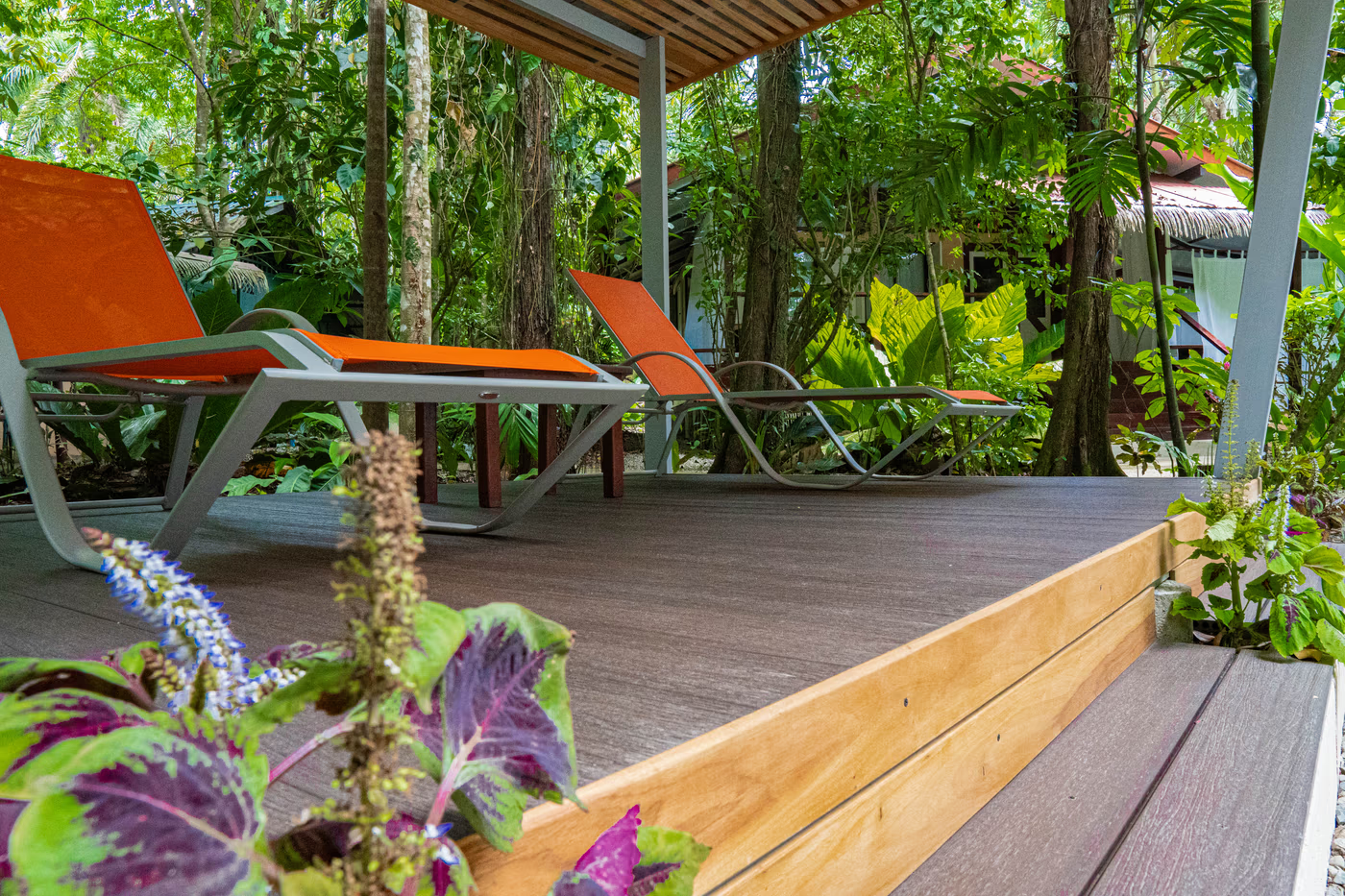
When the lodge was first built in the year 2000, the founders made one decision that has shaped everything since: not a single mature tree was cut down to make room for a bungalow.
The buildings are placed around the trees. The pathways curve. The roofs angle to let canopy branches hang where they always have. It’s the kind of choice that costs more in design hours and saves nothing on the surface — but two and a half decades later, you can feel the difference the moment you arrive.
What “Eco” Actually Means Here
The word “eco” gets thrown around. We try to be specific about what we actually do.
Local sourcing
Our breakfast fruit comes from neighbors. The fish at dinner is caught by people we know. The coffee is Costa Rican, not flown in. This isn’t a marketing point — it’s how a small lodge in a small village survives. Buying local is also the only way the local economy survives.
Water and waste
We treat our wastewater on-site through a biological system. We collect rainwater for irrigation. We compost what we can. We don’t have plastic single-use bottles in the rooms — every bungalow has a refillable jug of filtered water.
Energy
Most of our hot water is solar. Electricity comes from Costa Rica’s grid, which is over 99% renewable on average — one of the world’s cleanest. Where we can, we use ceiling fans instead of A/C, and the bungalows are designed for cross-ventilation.
What we ask of guests
Not much. We ask you to reuse your towel if you can. We ask you to turn off the A/C when you go to the beach. We ask you not to feed the wildlife — even the cute ones.
The Wildlife That Lives Here
We’re surrounded by the Talamanca rainforest, one of the most biodiverse places on the planet. Within walking distance of the lodge, guests have seen:
- Three-toed and two-toed sloths
- Howler monkeys and white-faced capuchins
- Toucans, parrots, and at least seven species of hummingbird
- Agoutis (the small forest rodents that look like tiny deer)
- Poison dart frogs in red and blue
- And — very rarely, very luckily — an ocelot
We don’t run a zoo. We don’t bait or feed animals to make them appear for guests. The wildlife you see is the wildlife that chose to live here, and we work hard to keep it that way.
What Sustainability Costs Us — and Why We Do It Anyway
Building around trees is expensive. So is treating water on-site. So is buying eggs from a farm 4 km away instead of from a wholesaler in Limón.
But the alternative — building a beach hotel that could be anywhere in the world, importing everything, scaling fast — would erase the very thing guests come here for. The forest. The quiet. The sense that the place still belongs to itself.
We’re not perfect. We have plenty of work ahead. But every choice we make, we try to ask the same question: would the forest be glad we did this?
If you want to support the kind of tourism that doesn’t strip-mine its surroundings, you already are — by reading this and considering a stay. Thank you.
Curious about anything specific? Send us a note at namuwoki@namuwoki.com.
Ready to Experience This Yourself?
Book directly with us for the best rate — breakfast included.
Book Direct — Best Rate